By Dr. Cem Dogan | ENT Specialist, The Pearl International Hospital, Doha, Qatar drcemdogan.com
There’s a particular kind of patient I see regularly — and I suspect they make up a larger portion of Qatar’s population than most people realise.
They’ve had a blocked or runny nose on and off for months, sometimes years. Their ears feel full, muffled, or “pressurised.” They wake up with a dull headache behind the eyes or across the forehead. Sometimes they hear a faint ringing that wasn’t there two years ago. Their GP has prescribed antihistamines and nasal sprays, which help a little, and then don’t. They’ve done two or three courses of antibiotics. Nothing quite fixes it.
By the time they sit in front of me, they’ve usually been managing these symptoms for a long time. Long enough that they’ve started to accept them as normal. They’re not normal.
What they’re describing — in most cases — is chronic sinusitis, often overlapping with middle ear dysfunction, allergic rhinitis, or turbinate hypertrophy. These conditions are connected more closely than most people realise. And in Qatar specifically, the environment makes all of them more likely.
This post is about understanding what’s happening, why it keeps happening, and what an ENT specialist in Doha can actually do about it.
Why Qatar Is Particularly Hard on Your Sinuses and Ears
I’ll say this upfront because I think it genuinely matters for how we approach ENT care in Qatar: the environment here is genuinely tough on the upper airway.
Fine desert dust circulates year-round and is small enough to bypass the nose’s natural filtration, lodging in the sinus and nasal passages. The shift between Qatar’s outdoor heat — regularly above 45°C in summer — and aggressively air-conditioned indoor spaces means the nasal lining is in a state of near-constant adjustment. Add in high humidity in certain seasons, mould spores from air conditioning systems that aren’t cleaned regularly, and the fact that Qatar has one of the highest concentrations of people from different parts of the world living together (with all the different respiratory viruses they carry), and you have a recipe for chronic upper airway inflammation.
The result is that conditions like chronic sinusitis, allergic rhinitis, and turbinate hypertrophy are common here — more common than in cooler, less dusty climates. If you moved to Qatar from Europe or East Asia and your sinuses have never quite been right since, this is likely why.
What Is Chronic Sinusitis — and Why Does It Keep Coming Back?
Sinusitis means inflammation of the sinus lining. Acute sinusitis comes on suddenly, usually after a cold, and clears in a few weeks. Chronic sinusitis is different. It persists for twelve weeks or longer, even with treatment, and tends to cycle in and out of people’s lives rather than resolving completely.
The sinuses are air-filled spaces in the bones of the face and skull — behind the cheeks (maxillary sinuses), between the eyes (ethmoid sinuses), in the forehead (frontal sinuses), and deep behind the nose (sphenoid sinuses). Normally, the sinus lining produces a thin layer of mucus that drains into the nasal passages. When the drainage pathways become blocked — by swelling, polyps, structural problems, or thick mucus — the sinuses become a closed, stagnant environment where bacteria and fungi can take hold.
Symptoms of chronic sinusitis include persistent nasal congestion, thick discoloured discharge (from the nose or down the throat), facial pressure or pain especially around the cheeks and eyes, reduced sense of smell, and fatigue. Many patients describe a constant low-grade feeling of being unwell — not sick enough to stay home, but never quite right.
The connection to Qatar’s environment is direct. Dust particles trigger nasal inflammation. The inflammatory response thickens the mucus. Thick mucus blocks the drainage pathways. Stagnant sinuses become infected. The infection creates more swelling, which blocks drainage further. It’s a cycle, and breaking it usually requires more than a single antibiotic course.
The Ear Connection: Why Sinus Problems Cause Ear Problems
This is the part that confuses many patients.
They come in for sinus pain and mention, almost as an aside, that their ears have been muffled lately. Or they come in for ear pressure and we find during the examination that their sinuses are the real source of the problem.
The link is the Eustachian tube — a narrow channel connecting the middle ear to the back of the nasal cavity. Its job is to equalise pressure between the middle ear and the outside world. Every time you swallow or yawn, the Eustachian tube opens briefly, letting air in and keeping the pressure balanced. This is why your ears “pop” when you swallow on a plane.
When the nasal cavity is chronically inflamed — due to sinusitis, allergic rhinitis, or turbinate hypertrophy — the area around the Eustachian tube opening swells too. The tube can’t open properly. Pressure builds behind the eardrum. Fluid may accumulate in the middle ear space, a condition called serous otitis media or “glue ear.”
The result is exactly what these patients describe: ears that feel full, blocked, or underwater. Hearing that sounds muffled. Occasional sharp pain when pressure changes — on a flight, going up in a lift, even bending forward. Sometimes a crackling or clicking sensation when swallowing.
And here’s the important point: treating the ears alone doesn’t fix this. If the root cause is nasal or sinus inflammation, treating the ear without addressing the underlying ENT condition is like mopping the floor without turning off the tap. I see patients who’ve been prescribed ear drops or had ears syringed repeatedly with no lasting improvement, because the source of the problem was always nasal.
Tinnitus: When the Ringing Is an ENT Problem
Tinnitus — persistent ringing, buzzing, hissing, or clicking in one or both ears — affects a significant proportion of adults. Most people know it as a noise problem, associated with loud music or occupational noise exposure. What fewer people know is that a meaningful proportion of tinnitus cases originate from nasal and sinus pathology, Eustachian tube dysfunction, or middle ear inflammation.
If your tinnitus started or worsened after a bout of sinusitis, a bad cold, or a flight, there is a good chance the ear pressure from Eustachian tube dysfunction is contributing to it. This matters because tinnitus of that origin — caused by a functional rather than a structural inner ear problem — often improves when the underlying nasal condition is treated.
I can’t promise every patient with tinnitus that treating their sinuses will resolve it. Tinnitus has multiple causes, and some originate deeper in the auditory pathway where ENT surgery has no role. But dismissing tinnitus as untreatable, or assuming it must be noise-induced, without first evaluating the nasal and sinus pathways, is an incomplete assessment. A proper ENT evaluation — including nasal endoscopy — is the right starting point.
Hearing Loss and the ENT Specialist: What’s Treatable and What Isn’t
Hearing loss broadly divides into two types. Sensorineural hearing loss arises from damage to the inner ear or auditory nerve — this is the type associated with ageing and noise exposure, and it is generally not reversible. Conductive hearing loss occurs when sound cannot pass properly through the outer or middle ear — and this type is often treatable.
For ENT doctors, conductive hearing loss is where we can often make a real difference.
Glue ear (serous otitis media), particularly in children, is a common cause of conductive hearing loss in Qatar. Chronic fluid in the middle ear dampens sound transmission across the eardrum and hearing bones. Treating the underlying nasal cause — including adenoid removal in children, or treatment of sinusitis and turbinate hypertrophy in adults — can dramatically improve hearing without any direct surgery on the ear itself. Where the fluid is persistent, grommet insertion (small ventilation tubes placed in the eardrum under anaesthetic) provides direct middle ear ventilation and is one of the most commonly performed procedures in paediatric ENT.
In adults, sudden or progressive unilateral hearing loss needs urgent assessment. Single-sided hearing loss, particularly if accompanied by tinnitus and vertigo, can indicate conditions like Meniere’s disease — an inner ear disorder that warrants proper audiological and ENT investigation, not just a “wait and see” approach.
Dizziness and Vertigo: Another ENT Problem You Might Not Expect
A lot of people don’t associate dizziness with ENT. They assume it must be neurological — a brain problem, blood pressure, something they need to see a general physician or neurologist for.
Sometimes that’s true. But the most common cause of vertigo in adults is benign paroxysmal positional vertigo (BPPV) — an inner ear condition caused by displaced calcium crystals in the semicircular canals. It produces sudden, brief spinning episodes triggered by specific head movements. BPPV has nothing to do with the brain and is treated by an ENT specialist with a series of repositioning manoeuvres. Most patients feel dramatically better within one or two sessions.
Vestibular neuritis — inflammation of the balance nerve, usually following a viral infection — is another common cause of significant dizziness that resolves with time and vestibular rehabilitation exercises. Meniere’s disease causes episodic vertigo combined with fluctuating hearing loss, tinnitus, and a sensation of ear fullness.
All of these are ENT conditions. All of them are manageable with the right diagnosis. And all of them get missed when patients assume dizziness must be something else and delay seeing an ENT specialist.
When Allergies Are Behind All of It
I want to flag something that cuts across every section of this post: allergic rhinitis — hay fever, year-round nasal allergy — is an underappreciated driver of almost every condition I’ve described above.
Allergic inflammation in the nasal lining causes swelling that blocks sinus drainage, blocks Eustachian tube function, and enlarges the turbinates. One untreated allergy can simultaneously produce sinusitis symptoms, ear pressure, turbinate hypertrophy, and disrupted sleep. And allergic rhinitis is genuinely prevalent in Qatar — the combination of dust mites, desert pollen, mould spores from air conditioning, and cockroach allergens (a surprisingly significant contributor in high-density urban environments) makes it common in both adults and children.
The right approach to allergic rhinitis in Qatar isn’t just antihistamines. Allergy testing, topical nasal steroid treatment, and in some cases allergen immunotherapy (gradually desensitising the immune system through controlled exposure) are available options. For patients whose nasal obstruction persists despite optimal allergy management, that’s when we start considering whether structural changes — turbinate hypertrophy or a deviated septum — are contributing.
Sinus Surgery: What It Actually Involves
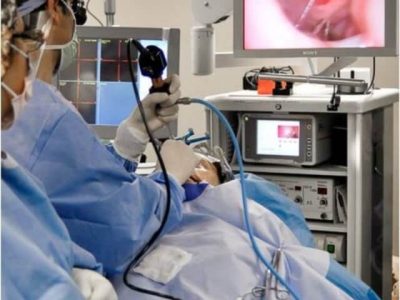
When chronic sinusitis doesn’t respond to medical treatment, functional endoscopic sinus surgery (FESS) is the standard surgical approach. It’s worth explaining what this actually is, because “sinus surgery” sounds more dramatic than it tends to be in practice.
FESS is performed entirely through the nostrils — no external incisions. Using a thin fibre-optic endoscope and small instruments, the ENT surgeon opens the natural drainage pathways of the sinuses, removes any obstructing tissue or small polyps, and restores normal mucus flow. The concept is straightforward: the sinuses don’t need to be cleaned out; they need to be able to drain themselves.
Recovery from FESS is generally well tolerated. The nose is congested for a couple of weeks while the internal surfaces heal, and regular saline rinses are important during this period. Most patients can return to normal activity within a week to ten days.
Where nasal polyps are part of the problem — and in Qatar, with its high rates of allergic disease, they often are — FESS also addresses these, though polyp disease requires ongoing medical management after surgery to reduce the chance of recurrence.
The Symptoms That Should Prompt an ENT Referral in Qatar
I see too many patients in Doha who’ve been managing vague upper airway symptoms for years. In some cases, the delay hasn’t caused serious harm. In others, untreated sinusitis has extended into adjacent structures, hearing has declined, or what turned out to be a significant nasal polyp burden has been present and growing for a long time.
Here are the situations where I’d encourage prompt ENT evaluation rather than continued self-management:
Nasal congestion that has never responded meaningfully to nasal sprays over a period of months. Ear fullness or muffled hearing that persists beyond three to four weeks, particularly if it followed a cold or sinusitis episode. Any sudden unilateral hearing loss — this warrants an ENT assessment within days, not weeks. Tinnitus that started after an upper respiratory illness or a flight, and hasn’t improved in six weeks. Dizziness or vertigo, particularly if episodic and accompanied by ear symptoms. Chronic facial pain or pressure, especially if it’s been attributed to “migraines” or “tension headaches” without clear resolution. Any child with recurrent ear infections, glue ear, or significant snoring.
None of these are emergencies in most cases. But none of them should simply be accepted as facts of life either.
My Approach at The Pearl International Hospital, Doha
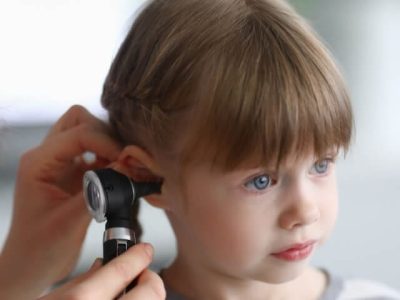
When I see a patient for any of the conditions described above, my first step is always a thorough evaluation — which in ENT means a nasal endoscopy, hearing assessment where relevant, and a full symptom history. Symptoms that seem unrelated often turn out to share a common cause.
Treatment starts conservatively. Medical management — the right combination of nasal steroids, saline irrigation, antihistamines, and in some cases antibiotics — resolves many cases when applied correctly and consistently. Surgery comes into consideration when conservative management has been properly tried and has genuinely failed, or when the anatomy is the primary driver of the problem.
If you’re living in Qatar with persistent sinus, ear, or hearing symptoms, I’d encourage a specialist consultation. Not because surgery is necessarily on the horizon, but because understanding what’s actually happening is the only way to address it properly.
You can find me at The Pearl International Hospital on Sevilla Street, The Pearl, Doha. For appointments, visit drcemdogan.com or call +974 4016 0000.
Related reading on this site:
- ENT Conditions and Treatments in Qatar
- Turbinate Hypertrophy — Causes and Treatments
- Septoplasty in Qatar
- Snoring and Sleep Apnea in Doha
- Nasal Polyps Treatment
- Dizziness and Vertigo
- Tonsil Diseases and Surgery
Dr. Cem Dogan is an ENT specialist and facial plastic surgeon based at The Pearl International Hospital, Doha, Qatar. He has over 14 years of surgical experience across the full spectrum of ENT conditions. For appointments: drcemdogan.com | +974 4016 0000
Tags: Chronic Sinusitis, ENT Qatar, ENT specialist Doha, chronic sinusitis Qatar, sinus infection treatment Doha, ear pressure ENT Qatar, tinnitus ENT Doha, hearing loss Qatar, glue ear Qatar, turbinate hypertrophy Qatar, deviated septum Doha, nasal polyps Qatar, sinus surgery Doha, ENT doctor Qatar, allergic rhinitis Qatar, dizziness vertigo ENT Doha, FESS Qatar, ENT specialist near me Qatar