ENT Specialist Qatar by Dr. Cem Dogan | ENT Specialist Qatar & Facial Plastic Surgeon, Doha, Qatar drcemdogan.com | The Pearl International Hospital
This is a question I hear — in different forms — almost every single day.
“My nose has been blocked for two years. Do I need surgery?”
“My husband snores so badly I’ve moved to the spare room. Is there anything you can do?”
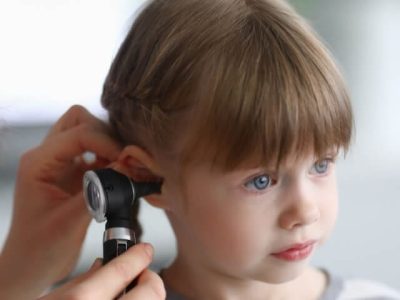
“My daughter keeps getting ear infections and her adenoids are enlarged. Her paediatrician mentioned surgery. Should I be worried?”
“I’ve hated my ears since I was a child. Is it too late to fix them?”
People come to an ENT clinic in Qatar with a symptom, not a diagnosis. They’ve usually done some reading online, which is a good start — but online searches for ENT symptoms tend to throw up a confusing mix of possibilities. Sometimes the answer is obvious once you’re sitting in front of a specialist. Often, the real cause of a problem is not the one the patient expected.
This blog is for anyone sitting somewhere between “something is wrong” and “I don’t know what to do about it.” I’ll walk through the most common ENT presentations I see in Doha, what’s usually behind them, and which procedure — if any — actually applies.
First, a Word About Qatar’s Specific ENT Environment
Before diving into procedures, it’s worth pausing on something I don’t see discussed often enough: Qatar presents a genuinely unusual set of ENT risk factors.
Desert dust particles are fine and persistent. The gap between outdoor heat (often above 45°C in summer) and indoor air conditioning is extreme — airways are constantly adjusting between hot dry air and cold conditioned air. Pollen seasons are real and affect a significant number of residents. And because Qatar has one of the most internationally diverse populations in the world, I see patients whose nasal anatomy, skin type, and genetic predispositions vary enormously — all of which matters when planning procedures like rhinoplasty or turbinate treatment.
None of this makes living here inherently bad for your ENT health. But it does mean that conditions like allergic rhinitis, turbinate hypertrophy, and chronic nasal obstruction are more common here than in many other countries. If you’ve arrived in Qatar from a temperate climate and your nose has never been the same since — you’re not imagining it. ( ENT Specialist Qatar )
Symptom: “I Can’t Breathe Through My Nose Properly”
This is the single most common reason adults visit my ENT Specialist Qatar.
Chronic nasal obstruction has three usual culprits, and they frequently overlap.
1. A deviated septum
The septum is the wall of cartilage and bone running down the middle of your nose. Most adults have some degree of septal deviation — the wall leans to one side, narrowing one or both nasal passages. A mild deviation causes no symptoms. A significant one can make one side of your nose feel permanently blocked.
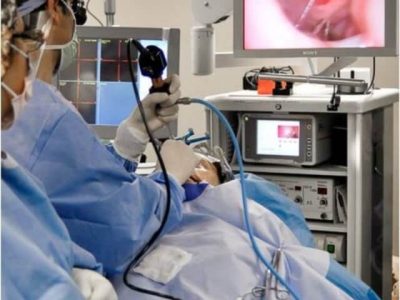
Septoplasty is the procedure that corrects this. It’s done entirely inside the nose — no external cuts, no visible scarring — and takes about 60 to 90 minutes under general anaesthesia. Most patients go home the same day or after one night. The internal congestion while healing takes a couple of weeks to settle, but many patients notice a real difference in airflow almost immediately after the swelling goes down.
2. Turbinate hypertrophy ( ENT Specialist Qatar )
The turbinates are bony shelves inside the nose covered in soft tissue. Their job is to warm, filter, and humidify the air you breathe. The problem is that this tissue swells in response to allergens, dry air, irritants, and hormonal changes — all of which are common in Qatar.
When turbinate swelling becomes chronic rather than occasional, it’s called turbinate hypertrophy. It can obstruct the nose as significantly as a deviated septum, but it’s an underdiagnosed condition because many patients (and some doctors outside of ENT) assume blocked nasal breathing is just a “sinus problem” or “allergies.”
Turbinate hypertrophy treatments start conservatively: nasal steroid sprays and saline rinses work well for many patients. When they don’t provide lasting relief, turbinate reduction surgery is the next step. This can be done with radiofrequency, laser, or microdebrider techniques — I choose the approach based on the anatomy and severity. The goal is always reduction, not complete removal, because you need some turbinate tissue for normal nasal function.
3. Both at once
This is actually the most common scenario I see. A deviated septum and enlarged turbinates often coexist, and treating only one rarely solves the full problem. When both are present, I usually address them in the same procedure — septoplasty combined with turbinate reduction.
Symptom: “I Want to Change the Shape of My Nose (and/or I Can’t Breathe)”
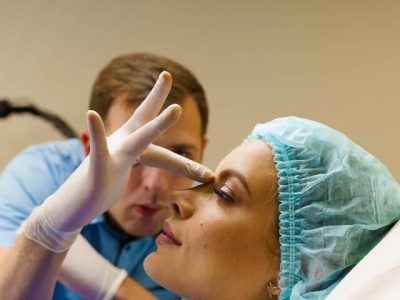
Rhinoplasty is the procedure that comes up most when people Google ENT surgery in Qatar, which makes sense — it’s one of the more searched cosmetic procedures in the region.
What surprises many patients is how often rhinoplasty and functional nasal surgery overlap. Some people come to me primarily for the breathing — their nose is crooked from an old injury, the septum is deviated, the airway is obstructed, and they’d also like the external appearance improved. Others come purely for cosmetic reasons and we discover, during the examination, that their septum is significantly deviated. Fixing the structure and the appearance in one procedure is almost always more efficient than doing them separately.
Rhinoplasty reshapes the nose — the bridge, the tip, the width, the angle between the nose and lip, the nostrils. The changes available are meaningful but not unlimited. I tell every rhinoplasty patient the same thing: we can improve what you have, and we can do it well. What we can’t do is give you someone else’s nose. The goal is a result that suits your face — not one that announces itself.
A few specific things I notice in my Qatar practice:
Patients from South Asian, Arab, and Middle Eastern backgrounds often present with thicker nasal skin, which requires a different technical approach to rhinoplasty than patients with thinner skin. Thick skin conceals fine cartilage changes that would be visible in a thin-skinned nose, which means both more and different work is needed to get a visible result.
Revision rhinoplasty — correcting a previous nose surgery that didn’t achieve the desired outcome — is more complex than primary rhinoplasty, and is a procedure not every ENT surgeon undertakes. If you’ve had rhinoplasty elsewhere and are unhappy with the result, ask specifically about the surgeon’s experience with revision cases before booking.
Recovery from rhinoplasty takes longer than most procedures. The nose looks presentable within two to three weeks. But the final result — where all the swelling is gone and the shape has settled — can take twelve months or more. Patience with the healing process is genuinely important.
Symptom: “I Snore — or My Partner Does”
Snoring keeps households awake across Doha, and I suspect it’s more prevalent here than many people realise. The research is clear that obesity, alcohol, and age are primary contributors — but nasal obstruction also plays a significant role that’s often missed.
When I see a patient for snoring surgery evaluation, the first thing I try to establish is where the snoring is coming from anatomically. This matters because treating the wrong site doesn’t work. ( ENT Specialist Qatar )
Snoring generated by the nose — when turbinate hypertrophy or a deviated septum causes the person to breathe through their mouth — is often resolved or significantly improved by septoplasty and/or turbinate reduction. No specific “snoring surgery” required.
Snoring generated by the soft palate and uvula — which is the most common site in adults — is a different matter. The soft tissue at the back of the throat vibrates as air passes through a narrowed airway. Procedures to address this include:
- UPPP (uvulopalatopharyngoplasty): removes and reshapes excess soft palate tissue. One of the more established surgical approaches for palatal snoring.
- Radiofrequency ablation of the soft palate: a less invasive outpatient technique that stiffens the palate to reduce vibration.
- Palatal implants: small rods inserted into the soft palate under local anaesthetic, stiffening the tissue.
Before any snoring surgery is planned, I need to rule out obstructive sleep apnoea (OSA) — a condition where breathing repeatedly stops during sleep. OSA isn’t just snoring; it carries genuine cardiovascular risks, and surgery alone is often not the right treatment. Patients with significant OSA may need CPAP therapy first, or instead. A sleep study, either at home or in a sleep lab, is part of the proper work-up.
I say this not to discourage anyone from seeking help for snoring, but because I’ve seen patients who had snoring surgery elsewhere without proper pre-operative assessment, and in some cases OSA was missed. The assessment matters as much as the surgery. ENT Specialist Qatar
Symptom: “My Child Keeps Getting Ear Infections / Is Always Sick / Snores at Night”
If you have young children in Qatar, there’s a reasonable chance the words “enlarged adenoids” or “tonsils” have come up in a paediatric consultation at some point.
Adenoid and tonsil surgeries are the most frequently performed ENT procedures in children, and for good reason. The tonsils (at the back of the throat) and adenoids (behind the nose) are immune tissue that can become chronically enlarged or repeatedly infected, causing a cluster of problems that significantly affect a child’s quality of life. ( ENT Specialist Qatar )
The main indications for tonsillectomy in children are recurrent tonsillitis (roughly five or more significant infections per year, for at least two consecutive years) and airway obstruction causing sleep-disordered breathing or severe snoring. For adenoids, persistent glue ear (fluid behind the eardrum that causes hearing loss) is a major driver — as is chronic nasal obstruction, mouth breathing, and poor sleep.
These procedures are very often combined: adenoidectomy plus tonsillectomy, sometimes with the simultaneous insertion of grommets (ventilation tubes in the eardrums) for glue ear. Combining them in a single anaesthetic is more convenient for the child and the family.
A couple of practical things parents ask me regularly: ( ENT Specialist Qatar )
How urgent is it? Recurrent tonsillitis that’s disrupting a child’s school attendance and quality of life doesn’t necessarily need to be done next week, but it shouldn’t be deferred indefinitely either. Chronic sleep-disordered breathing in children — where the child is waking repeatedly, mouth breathing, and fatigued during the day — tends to warrant more prompt attention because of the documented effects on development and behaviour.
Is my child too young? There’s no absolute lower age limit, but the risks and the benefits need to be weighed carefully in children under three. Most procedures are done between ages three and eight.
Recovery from tonsillectomy deserves honest mention: it’s not nothing. Children (and adults even more so) need proper pain management, adequate hydration, and restricted diet for about two weeks. There is a small but real risk of secondary haemorrhage — bleeding that occurs several days after surgery. Families need to know what to watch for and when to seek help.
Symptom: “My Ears Stick Out and I’ve Always Hated Them”
Prominent ear surgery — otoplasty — is the procedure that corrects ears that protrude significantly from the head. It’s shorter and less complex than rhinoplasty, usually takes under two hours, and the recovery is more straightforward.
I want to say something direct here, because I think it gets glossed over in typical medical descriptions: prominent ears don’t cause physical harm, but the psychological impact — particularly in children who attract teasing — can be real and lasting. I’ve operated on adults in their thirties and forties who have spent decades avoiding certain hairstyles or photographs. That’s not trivial.
Otoplasty in children is ideally done from age five or six, when the ear cartilage is developed enough to work with, and before the social pressures of primary school become significant. In adults, there’s no upper age limit — it’s simply a matter of general health and having realistic expectations.
The procedure involves small incisions behind the ear (where the scar sits naturally hidden in the fold), reshaping the cartilage, and repositioning the ear closer to the head. In children, this is done under general anaesthesia. Adults often manage well with local anaesthetic and sedation. A headband is worn for several weeks afterwards to protect the ears while healing.
Results are permanent. Most patients are very satisfied — not because the procedure is miraculous, but because the goal is modest and well-defined: ears that no longer protrude. That’s achievable. ( ENT Specialist Qatar )
When You Don’t Need Surgery at All
I want to include this section because I think it’s something specialists don’t say often enough.
Not every blocked nose needs an operation. Not every snoring problem requires surgery. Not every child with enlarged tonsils needs a tonsillectomy.
Good ENT practice starts with conservative management — nasal sprays, antihistamines, allergy testing, saline rinses, weight loss advice, positional changes for snoring — and moves to surgery only when those approaches have been genuinely tried and have genuinely failed, or when the anatomy is clearly the problem regardless of other measures.
I say this as someone who performs these procedures regularly. The outcome from any ENT surgery is better when the decision to operate is taken carefully, when the diagnosis is correct, and when the patient understands what the procedure can and cannot achieve.
If you’ve been prescribed nasal sprays for years and they’ve never made a meaningful difference, it’s worth asking whether the underlying cause is structural rather than inflammatory. That’s the kind of question a specialist consultation is designed to answer. ( ENT Specialist Qatar )
How to Get the Most From an ENT Consultation in Qatar
A few practical points for anyone considering a consultation:
Come with a history. When did the symptoms start? What makes them worse? What have you tried? Have you had any previous ENT procedures or nasal injuries? This information shapes the examination and shortens the path to an answer.
Ask about non-surgical options first. Any reputable ENT surgeon should discuss these before recommending an operation. If a surgeon moves straight to surgery without exploring conservative management, that’s worth questioning.
Ask specifically about the surgeon’s experience with your procedure. Rhinoplasty, in particular, varies enormously in complexity. Revision rhinoplasty and procedures on thicker skin require significantly more experience than a straightforward primary case. It’s a reasonable question to ask directly.
Understand recovery before you agree to anything. The procedure itself is often the easy part. Knowing what the recovery involves — time off work, restrictions, what normal healing looks like versus what requires urgent attention — is something you should have clearly explained to you before the day of surgery. ( ENT Specialist Qatar )
ENT Specialist Qatar
I see patients at The Pearl International Hospital in Doha. My practice covers the full range of ENT conditions — from snoring and turbinate hypertrophy to rhinoplasty, septoplasty, adenoid and tonsil surgery, and prominent ear correction. For patients considering rhinoplasty or revision surgery, I also operate in Istanbul when required.
If you’ve been sitting on an ENT concern — whether it’s functional, cosmetic, or somewhere between the two — I’m happy to see you for a consultation. The first step is understanding what’s actually causing the problem.
That’s usually a lot simpler than the internet makes it seem.
Dr. Cem Dogan is an ENT specialist Qatar and facial plastic surgeon based at The Pearl International Hospital, Doha, Qatar. For appointments: +974 4016 0000 & +974 5523 9430 & drcemdogan.com